
Your Cart is Empty


12" Bowl Demo
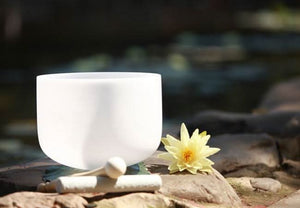
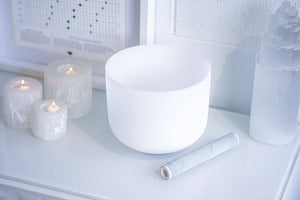
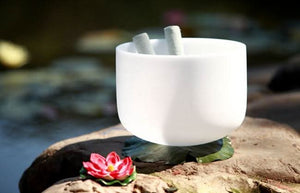
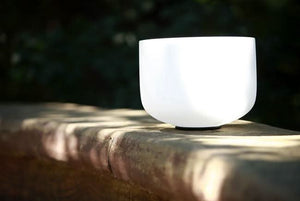
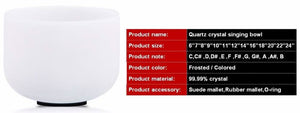
Description: Made of purest quartz.
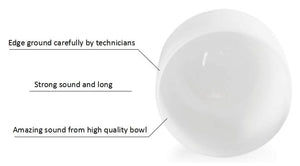
The bowls emit a powerful, pure resonance. These bowls are much more reverberating with the tone lasting longer, simply because of the quality and amount of crystal.
For maximum sound impact play on flat surface or rubber O ring. Do not use decorative cushions.
Each bowl is tested carefully to identify its sound.
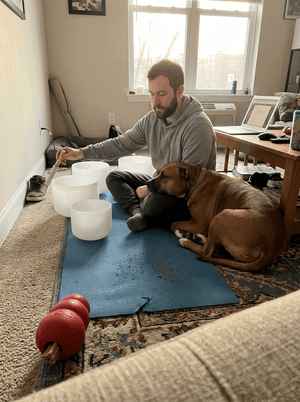
Veterinarians now increasingly recommend this for your anxious cute furry friend.
“Dogs are deeply sensitive to energy and vibration,” explains Denise Bozenski, certified holistic pet health coachand founder of Revive & Thrive Canine Wellness. “Using the right sound frequencies can help dogs release tension, reduce anxiety, and even support physical healing by calming the nervous system.”
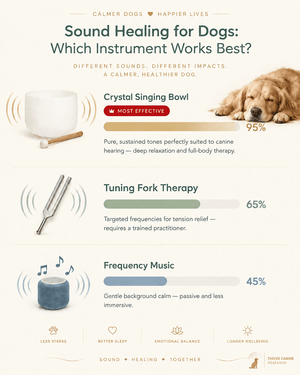
Sound healing uses specific tones, frequencies, and vibrations to help regulate the nervous system, promote relaxation, and support cellular healing in the body. Tools such as tuning forks, singing bowls, or carefully curated frequency music can be used during sessions or integrated into your dog’s home environment.
The calm frequency your doggo knows. Now in your living room.
Between 25 and 150 Hz — is the range scientists link to self-soothing, tissue repair, and calm. The Companion Bowl's deep C note rings at 128 Hz, inside that band — the same frequency animal sound-therapy practitioners have applied with weighted tuning forks for decades. We tuned it into a room-filling quartz instrument.
It speaks below their startle zone. Dogs hear sharp, high sounds best (4,000–10,000 Hz) — that's why doorbells and fireworks hit so hard. The Companion Bowl's energy lives at the opposite end: a deep, slow hum dogs perceive as gentle warmth, not noise.
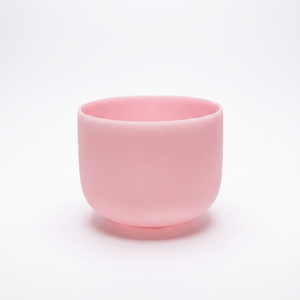
Develops stronger bond.The sounds especially from rose quartz bowls are made to create a deeper bond between you and your canine companions.
They feel it as much as hear it. At 128 Hz, sound travels through the floor as soft vibration — closer to a resting heartbeat than a ringtone. For an animal lying nearby, it's felt calm.
It's the woof home territory. Injured dogs and rescues woof more to soothe themselves. The Companion Bowl sounds in the same frequency family — familiar, native, safe.
Backed by real research direction. Peer-reviewed studies show cats prefer sounds built on their own vocal frequencies, and slow, low, quiet sound reduces stress behaviors in shelter dogs. Designed within canine and feline hearing comfort ranges.
The 15 minutes before you leave the house
Thunderstorms, fireworks, the vacuum's aftermath
Post-dinner wind-down — their grooming hour, your exhale
Moving week, new baby, new pet, vet-visit mornings
Here's the part owners don't expect: 128 Hz sits in the range used in human vibroacoustic relaxation too. The same evening ritual that settles their pacing settles your shoulders. You'll start playing it for them. You'll keep playing it for you.
A calm owner is also a calmer pet. This leads to a ever coumpunding postive cycle.
Soft rim-singing, six feet of distance, and always an open door. Your companion chooses to stay — and that's how you'll know it's working. Most do.
Every household has two nervous systems that need the evening to end well. Now they share an instrument.

The Companion Bowl supports relaxation rituals and is not a treatment for medical or behavioral conditions. Persistent anxiety warrants a veterinarian's care.
Unique 9 step production: Our crystal singing bowls are made from pure crushed quartz and heated to about 4000 degrees in a centrifugal mold. When the temperature reaches 3000-4000 degrees celsius, the sand becomes liquid, these are cooled into amazing crystal singing bowls. Hand molded and polished.
Inventory:Limited Quantity. We sell out often. Please consider getting two or more. Get one for yourself or your friends/family who practices meditation, yoga, holistic sound healing.
Features:
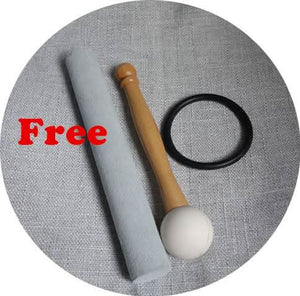
Order Includes: Special felt mallet for softer tone more suitable for pets, Suede stick, and Rubber O-ring. Companion guide
This is a brief description of the playing technique called "Around the rim" technique.

Above image show the effectiveness and before and after tests of various instrument sessions on canines over a one month period. (Dr. Fallek assessment tool)


